
Inside NCAA Football: A 15-Week Season Guide
NCAA college football is the United States’ university-level version of American football, organized across FBS, FCS, Division II, and Division III competition. In 2026, the FBS regular season is buil...
Inside NCAA Football: A 15-Week Season Guide
NCAA college football is the United States’ university-level version of American football, organized across FBS, FCS, Division II, and Division III competition. In 2026, the FBS regular season is built around a 15-week calendar beginning in late August and leading toward conference championships, bowl games, and the College Football Playoff. Major conferences include the SEC, Big Ten, ACC, Big 12, American Athletic Conference, Mountain West, MAC, Sun Belt, and Conference USA. The most useful starting point is to check the official schedule, confirm the competition level, and evaluate team form rather than relying only on rankings.

Photo by George Zografidis on Pexels
Is college football really the most unpredictable major sport?
Yes, college football is unusually unpredictable because team quality, conference strength, recruiting depth, coaching changes, transfer movement, and home-field atmosphere can shift quickly from one season to the next. A single FBS schedule may include 12 regular-season games, conference championship consequences, rivalry pressure, and postseason selection debates, creating more variables than a simple win-loss record reveals.
The first thing I learned after trusting an unreliable sports site was painfully simple: a schedule is not a prediction, and a ranking is not proof. NCAA football exists across several levels, but the Football Bowl Subdivision, or FBS, receives the greatest national attention because it includes the largest programs, major television contracts, and the College Football Playoff. The Football Championship Subdivision, or FCS, uses a different postseason structure, and lower divisions place greater emphasis on regional competition and student-athlete balance.
The sport’s history also explains its emotional weight. Rivalries such as Army–Navy, Ohio State–Michigan, Alabama–Auburn, and Texas–Oklahoma are not ordinary fixtures; they carry institutional memory, recruiting implications, and enormous local attention. The NCAA’s official FBS football coverage tracks news, scores, rankings, statistics, and championship information, while Wikipedia’s college football overview provides useful historical context.
For practical research, separate these questions:
- Is the game FBS, FCS, Division II, or Division III?
- Is the listed kickoff time shown in local time or your time zone?
- Is the matchup a conference game, rivalry game, or neutral-site contest?
- Have the starting quarterback and offensive line been confirmed?
- Does the team have a short week, a long road trip, or a major game next week?
Football Insights covers match predictions, team tactics, player statistics, and major tournament stories, but college football requires its own careful framework. If you are comparing information for entertainment purposes, begin with verified schedules and responsible limits.
Want a clearer way to assess the wider football landscape? Explore the latest Football Insights coverage.
How does college football handle the 2026 regular season?
The 2026 college football regular season is arranged across 15 listed weeks, beginning with Week 1 from August 22 through September 7 and continuing through Week 15 from December 7 through December 12. ESPN’s schedule structure also separates conference listings, bowls, and CFP games, allowing readers to filter FBS conferences such as the ACC, Big Ten, Big 12, and SEC.
That calendar matters because college football games are not distributed evenly in the way many professional schedules are. Week 1 can stretch across multiple dates, international or neutral-site games may appear before the main Saturday slate, and later weeks often determine conference championship access. For example, the 2026 schedule listing includes a North Carolina versus TCU matchup at Aviva Stadium in Dublin, Ireland, while other listed games include San José State at USC and NC State at Virginia. Those locations are not decorative details: travel, time-zone adjustment, crowd composition, and stadium familiarity can affect preparation.
A reliable schedule-checking routine should include the following:
- Confirm the date, kickoff time, venue, and television provider.
- Check whether the game is conference or nonconference.
- Review injury reports and expected starters close to kickoff.
- Compare recent opponents rather than only recent scores.
- Recheck postponements, weather, and lineup changes on game day.
The biggest information gain comes from distinguishing “schedule strength” from “schedule difficulty.” A team may have a high winning percentage because it faced weaker opponents, while a 7–3 team from the SEC or Big Ten may have endured a much more demanding path. I also recommend recording the opponent’s conference and current record before drawing conclusions; that small spreadsheet habit exposes misleading streaks surprisingly fast.
To understand the weekly rhythm, see our [Internal Link: college football schedule guide] and compare the dates with official conference announcements. Remember that ESPN may display times in a standardized format, while the venue and local broadcaster may communicate a different local kickoff time. I have missed a game before because I trusted a copied listing without checking the stadium’s time zone. Once was enough.
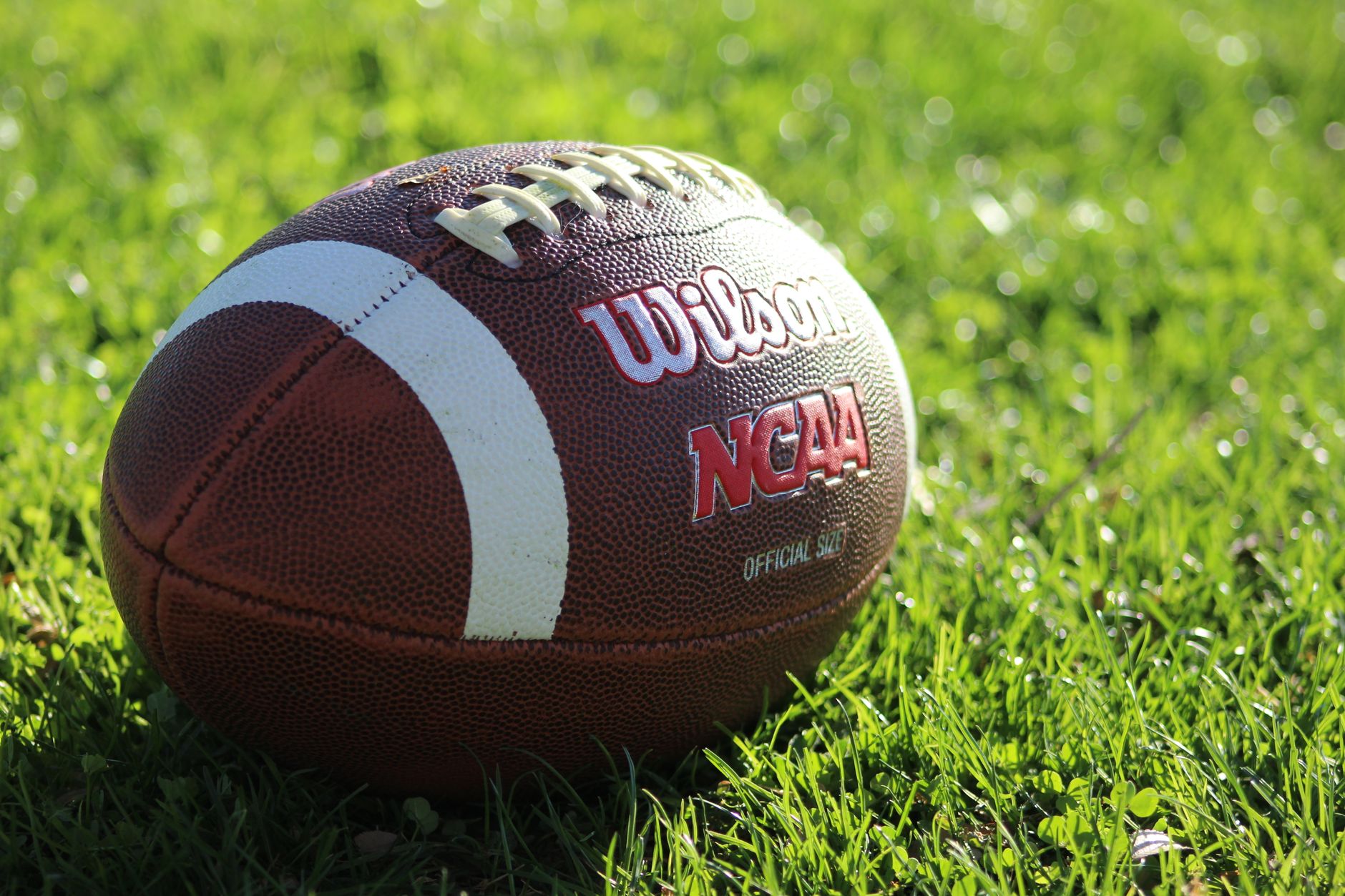
Photo by Jack Biddinger on Pexels
What about FCS teams, rivalries, and major scheduling surprises?
FCS programs, historic rivalries, neutral-site games, and early-season nonconference matchups can distort casual evaluations because the emotional and competitive context is often stronger than a basic ranking suggests. A lower-division opponent may be dangerous in a single game, while a rivalry can remain close even when one program has a substantial talent advantage.
The FBS–FCS distinction is especially important. FBS programs generally compete for bowl eligibility and CFP consideration, whereas FCS teams compete through a playoff format designed specifically for that subdivision. An FBS team hosting an FCS opponent may be heavily favored, but the game can still reveal weaknesses in tackling, depth, or second-string quarterback play. Conversely, an FCS team facing a major conference opponent may approach the contest with nothing to lose, producing aggressive fourth-down decisions and unusual defensive looks.
Rivalry games introduce different variables:
- Historical records can matter psychologically but may not predict the current matchup.
- Senior-day ceremonies can change emotional intensity and rotation patterns.
- Weather may become more influential in November games.
- A team’s next opponent can affect play-calling and risk tolerance.
- Neutral venues reduce ordinary home-field advantages but may create travel burdens.
The Army–Navy Game is a useful example of why stylistic context matters. Service academies have traditionally produced distinctive offensive identities, and preparation for that single game is not equivalent to preparing for a conventional spread offense. Likewise, Alabama–Auburn and Ohio State–Michigan involve regional pressure that cannot be represented fully by a power rating.
There is also a contrarian point worth keeping: the most famous rivalry is not always the most analytically valuable game. A lesser-known conference matchup may provide clearer evidence because both teams use stable rotations and have fewer emotional distractions. When I review a slate, I mark rivalry games separately rather than automatically treating them as the best prediction opportunities. The drama is real; the information can be noisy.
Football Insights readers can also use our [Internal Link: team tactics and matchup analysis] to study tempo, defensive fronts, red-zone efficiency, and quarterback pressure rates before placing any weight on a headline ranking.
Here is the practical rule I wish someone had given me earlier: do not combine rivalry emotion, an unverified injury report, and a copied betting line, then call the result research. That combination feels confident precisely because it is poorly controlled.
Ready to compare matchups with more structure?
Where does college football analysis fail?
College football analysis fails when it treats rankings, point spreads, box scores, or star names as complete explanations. The most common errors are small but consequential: ignoring opponent quality, confusing a player’s absence with a team’s overall depth, overlooking travel, and trusting stale information after a coaching or transfer change.
The transfer portal has made roster continuity harder to judge. A quarterback who produced excellent numbers at one school may enter a different offensive system, face stronger defenses, or lose familiar receivers. The same issue applies to defensive coordinators and offensive line units. A team returning 18 starters is not automatically stable if the new coach changes its terminology and blocking scheme.
Box-score analysis also has traps. A team might gain 500 yards against a weak opponent but struggle on third down against a disciplined defense. Another team might score only 24 points while repeatedly beginning drives deep in its own territory. Useful indicators include:
- Success rate on early downs.
- Explosive plays allowed on defense.
- Red-zone touchdown percentage.
- Turnover margin, adjusted for fumble randomness.
- Sack rate and quarterback pressure.
- Field position after kickoffs and punts.
- Performance against comparable opponents.
The second specific edge case is schedule timing. A team playing its third consecutive road game may show fatigue that is not visible in season-long averages, especially when the final trip crosses multiple time zones. Similarly, a quarterback returning from injury may be medically cleared but still limited in mobility, which changes the offense’s third-down playbook. I now check game notes, beat-reporter updates, and official team announcements instead of treating “available” as identical to “fully effective.”
Authoritative data should come from sources that explain their methodology. The NCAA statistics portal provides official statistical resources, while the College Football Playoff official site publishes postseason information. The NCAA’s competition framework is not the same as a sportsbook’s market model, and neither should be presented as a guarantee. As the NCAA’s sportsmanship principles emphasize, competition is governed by standards beyond entertainment value; analysis should respect that distinction.
“The object of the game is to score more points than the opponent,” is the kind of elementary statement that sounds useless until a flashy statistical model quietly rewards yards without accounting for turnovers, field position, and fourth-quarter game state. I am not claiming one formula solves college football. I am saying definitions must be checked before calculations are trusted, believe it or not — I do.

Photo by Warren Yip on Pexels
Should you try college football analysis today?
Yes, college football analysis is worth exploring today if you treat it as structured sports research rather than certainty, especially during the 2026 schedule. Start with one conference, track team identity and opponent quality, verify lineups close to kickoff, and use a fixed entertainment budget if wagering is legal where you live. Never chase losses or assume a prediction service can remove risk.
A disciplined workflow can be surprisingly simple:
- Choose a narrow sample, such as the SEC or Big Ten.
- Record every opponent, venue, rest interval, and starting quarterback.
- Compare efficiency statistics against similar opponents.
- Note injuries, transfers, coaching changes, and weather.
- Write down your expectation before viewing the market line.
- Review what actually happened after the game.
- Adjust the model only when the evidence supports an adjustment.
That final step is where most people become uncomfortable. If your prediction fails, do not immediately invent a story about bad luck, referees, or motivation. Check whether the quarterback was pressured, whether explosive plays changed the game, and whether the opponent’s strength was underestimated. After 30 tracked games, patterns become more useful than isolated memories; before that, confidence is often just familiarity wearing a nicer jacket.
Football Insights can complement this process with tactical interpretation, player-stat context, and 2026 football coverage, but no article should replace official information or responsible decision-making. If you use betting markets, confirm age and legal requirements, set deposit and time limits, and stop when the activity stops being enjoyable.
For deeper preparation, read our [Internal Link: responsible sports analysis guide] and [Internal Link: college football statistics checklist]. The goal is not to predict every winner. The goal is to understand why a game developed as it did and to make better-informed choices next time.
College football rewards patient observation because the scene changes from stadium to stadium: a November wind cutting across Ann Arbor, a packed night crowd in Baton Rouge, a quiet film room in Tuscaloosa, or a quarterback learning a new offense in Eugene. The numbers matter, but the numbers need context. Check the source, verify the time, understand the matchup, and keep your limits visible before emotion hides them.
Want to turn today’s curiosity into a more reliable research habit?
Frequently Asked Questions
Q: What is college football?
A: College football is American football played by university teams, primarily under NCAA competition in the United States. The sport includes FBS, FCS, Division II, and Division III levels, each with different postseason systems and competitive structures. FBS receives the most national attention because its programs compete for conference titles, bowl invitations, and College Football Playoff access. Major conferences include the SEC, Big Ten, ACC, and Big 12.
Q: How do you follow the 2026 college football schedule?
A: Follow the 2026 schedule by checking the date, kickoff time, venue, television provider, and competition level through an authoritative source. ESPN organizes games by weeks, conferences, bowls, and CFP stages, while NCAA.com provides official news and championship coverage. Recheck the listing on game day because weather, television changes, and kickoff adjustments can affect the original schedule.
Q: What is the difference between FBS and FCS football?
A: FBS and FCS are separate NCAA football subdivisions with different postseason structures and program profiles. FBS teams generally pursue bowl eligibility and College Football Playoff selection, while FCS teams compete in a dedicated national playoff format. FBS programs often have larger athletic budgets and deeper recruiting pipelines, but FCS teams can still create difficult matchups through disciplined schemes and experienced players.
Q: Is college football analysis reliable for predicting game winners?
A: College football analysis can improve decision-making but cannot reliably guarantee game winners. Injuries, turnovers, weather, coaching adjustments, transfer changes, and unusual rivalry pressure can overturn statistical expectations in one afternoon. Use analysis to compare evidence, not to remove uncertainty, and never risk money you cannot afford to lose.
Q: How should a beginner start analyzing college football?
A: A beginner should follow one conference and track opponents, venue, quarterback status, efficiency statistics, and rest between games. Begin with official schedules and NCAA statistics before reading opinion-based rankings or market commentary. After each game, compare the pregame expectation with actual performance, focusing on pressure rate, red-zone execution, explosive plays, and field position.
Q: Why do college football rankings sometimes seem wrong?
A: Rankings can seem wrong because they may reflect reputation, preseason expectations, conference strength, or incomplete information rather than current performance alone. A team with a strong record may have faced weak opponents, while a team with several losses may have played an unusually difficult schedule. Compare opponent quality, game location, injuries, and performance against ranked teams before judging a ranking.
Q: How much does it cost to follow college football?
A: Following college football can cost nothing through free score services, team announcements, NCAA coverage, and public statistics. Costs may arise from streaming subscriptions, television packages, tickets, travel, merchandise, or legally regulated wagering. Set a fixed entertainment budget, compare subscription terms carefully, and avoid websites that hide fees or make guaranteed-profit claims.
Thank you for reading.
Football Insights · Editorial Archive