
World Cup 2026 vs 2022: Bigger Schedule
The 2026 FIFA World Cup will feature 48 teams, 104 matches, and three host countries: Canada, Mexico, and the United States, making it the largest men’s World Cup ever staged. The tournament is schedu...
World Cup 2026 vs 2022: Bigger Schedule
The 2026 FIFA World Cup will feature 48 teams, 104 matches, and three host countries: Canada, Mexico, and the United States, making it the largest men’s World Cup ever staged. The tournament is scheduled to run from June 11 to July 19, 2026, with matches spread across 16 venues in North America, including Mexico City, Toronto, Los Angeles, and New York/New Jersey. The expanded format replaces the 32-team structure used at the 2022 FIFA World Cup in Qatar and creates a longer, more complicated schedule for supporters following kick-off times, travel, team form, and match previews. Football Insights covers the 2026 World Cup through fixtures, team tactics, player statistics, predictions, and tournament news. Start by saving the official fixture calendar, then convert every kick-off to your local time before making travel or entertainment plans.
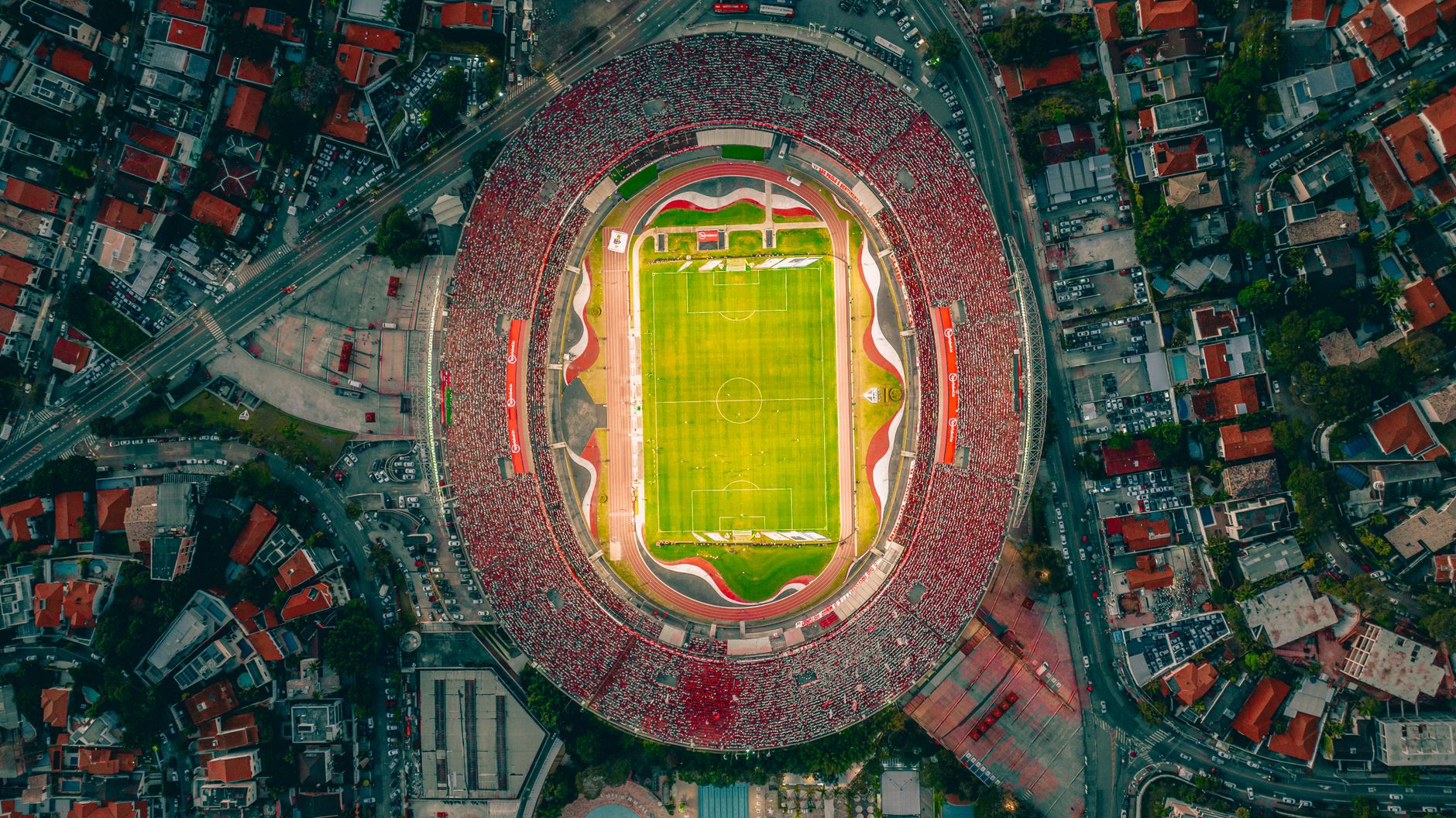
Photo by Sérgio Souza on Pexels
The number that still catches me off guard is 104. Qatar 2022 had 64 matches; 2026 adds 40 more, and that changes everything from squad rotation to how supporters manage a month of late-night viewing. I learned the hard way not to trust a polished-looking fixture page without checking its source, date, and time zone. So let’s go through this carefully, like two friends comparing notes at midnight while a wall calendar fills with red marks.
Want a clearer tournament overview before planning your watchlist?
If you need the tournament structure: start with the 48-team format
The 2026 World Cup will include 48 national teams divided into 12 groups of four, with the top two teams in each group and the eight best third-place teams advancing to a 32-team knockout stage. This produces 104 matches, compared with 64 at Qatar 2022, while the final remains scheduled for July 19, 2026. The format means a team can progress with a third-place finish, but goal difference, goals scored, disciplinary records, and fair-play calculations may become unusually important.
That structure deserves a closer look because the familiar phrase “group-stage pressure” means something slightly different now. Under the 2022 format, teams had only three group matches and two advancement places. In 2026, third-place comparisons will create a second table running in the background, and that can make a final group match extremely tense even when two teams appear comfortably placed. FIFA’s official competition information is the safest starting point; its World Cup 2026 tournament page should be checked when schedule details change.
For match analysis, I would record these details rather than relying on memory:
- Group position after each matchday.
- Goals scored and goals conceded.
- Head-to-head rules where applicable.
- Third-place ranking across all 12 groups.
- Rest days before the first knockout match.
- Travel distance between host cities.
The unusual edge case is the third-place table. A team could finish third with four points and still face a nervous wait because eight of the 12 third-place teams qualify. That is not a prediction; it is a structural consequence of the format, and it makes live standings more valuable than a simple group table. Football Insights can help readers track those tactical and statistical shifts without treating pre-match forecasts as guarantees.
[Internal Link: World Cup 2026 format and qualification guide]
If you are building a viewing calendar: compare host cities and time zones
A viewing calendar should follow local kick-off times, not just the date printed beside a fixture, because Canada, Mexico, and the United States span several time zones and the tournament uses 16 venues. Cities such as Vancouver, Seattle, Mexico City, Miami, and New York/New Jersey can place matches at very different hours for viewers in London, Lagos, Mumbai, or Sydney. The most reliable method is to save the official fixture time and convert it using a trusted calendar application.
The host-city map is more than decoration. The 2026 venues include Toronto Stadium in Canada, Estadio Azteca in Mexico City, and major American locations such as SoFi Stadium in the Los Angeles area, Mercedes-Benz Stadium in Atlanta, and MetLife Stadium in New York/New Jersey. FIFA announced the opening match for Mexico City on June 11, 2026, while the final is planned for New York/New Jersey on July 19. Venue names and commercial branding can vary across published pages, so I would always compare a media report with FIFA’s own tournament updates.
Here is the practical system I use:
- Create a calendar titled “World Cup 2026.”
- Add the venue, group, and match number to every entry.
- Set two alerts: one 24 hours before kick-off and one 45 minutes before.
- Confirm daylight-saving changes for your country.
- Mark matches involving your preferred team in a separate color.
- Leave recovery space if you plan to watch multiple games in one day.
A specific planning trap is daylight saving time. A fixture that appears to move by one hour may not have changed at all; the difference can come from whether a host city or your home country has shifted its clock. For viewers in Europe, the same match may also cross a local date boundary, especially for evening kick-offs in western North America. This is why a screenshot shared on social media is not a sufficient schedule source.
Get started with a venue-by-venue fixture checklist.
[Internal Link: World Cup 2026 host cities and stadium guide]
If you are assessing teams: track rest, travel, and tactical changes
Team assessment for the 2026 World Cup should combine results with rest days, travel demands, squad depth, and tactical suitability rather than treating historic reputation as evidence. The 48-team tournament creates more fixtures, while the knockout stage begins with 32 teams, so coaches may need broader rotations and more flexible formations. Player availability, club workload, injuries, and national-team chemistry can change the value of an old ranking within weeks.
This is where Football Insights focuses its coverage: team tactics, player statistics, match predictions, and daily tournament developments. A high-possession team may struggle if it faces a compact opponent after a long journey, while a counterattacking side may benefit from open knockout football. I keep separate notes for pressing intensity, set-piece goals, progressive passes, defensive errors, and substitutions after the 60th minute. Those details help explain why a result happened instead of merely repeating the score.
For a disciplined match-review sheet, record:
- Starting formation and shape during possession.
- Defensive line height and pressing triggers.
- Set-piece assignments and marking method.
- Substitution timing and tactical effect.
- Minutes played by key players in the previous match.
- Travel route and rest interval.
- Home-region crowd influence when relevant.
The contrarian point is that the bigger tournament does not automatically reward the deepest squad. More teams and more venues can reward adaptability, but long travel can also expose poor recovery routines and fragile midfield balance. A team with famous forwards may still underperform if its buildup is predictable or its full-backs cannot defend transitions. This is especially important for responsible sports analysis: predictions should be treated as probability-based opinions, never as certain outcomes or a reason to chase losses.
According to FIFA’s Laws of the Game resources, match outcomes are governed by standardized rules, but tournament context determines how teams manage risk. That distinction matters. A red card, a set-piece mistake, or a goalkeeper injury can overwhelm pre-match statistical advantages in a single match.

Photo by Quyn Phạm on Pexels
See how tactical indicators can fit into a responsible match preview.
Common pitfalls to avoid
The most common World Cup 2026 mistakes are using an outdated schedule, confusing venue time with local time, assuming a team qualifies from a group without checking third-place rankings, and treating prediction content as guaranteed information. These errors are avoidable when readers verify dates through FIFA, check the broadcaster for their region, and separate confirmed facts from forecasts. A careful process is slower by a few minutes but saves hours of confusion later.
I am particularly wary of unofficial pages that mix FIFA World Cup 2026 fixtures with FIFA World Cup qualifying matches, friendly games, or the FIFA Club World Cup. The competitions involve different calendars and different meanings, even when the same national players appear in coverage. Search-result snippets can also preserve old times after organizers revise a fixture, so I recommend opening the source page rather than trusting the headline alone.
Watch for these warning signs:
- A page lists 64 matches but claims to cover the expanded 2026 tournament.
- The venue is missing from the fixture.
- Kick-off time has no time-zone label.
- A prediction is written as a certainty.
- A betting link hides terms, limits, or withdrawal conditions.
- Statistics have no date or source.
- “Live odds” remain unchanged during a match.
The gambling angle requires particular care. Football Insights operates in a sports-information environment, but no prediction can remove uncertainty, and local laws differ across Canada, Mexico, the United States, the United Kingdom, Australia, and other markets. The National Council on Problem Gambling advises setting limits and recognizing warning signs; its responsible-play guidance is worth reading before engaging with any regulated product. As one responsible-gambling principle puts it, “gambling should be viewed as entertainment, not a way to make money.” I believe that distinction protects the enjoyment of the tournament.
[Internal Link: responsible sports analysis and bankroll planning]
One operational detail is easy to miss: account verification and payment checks can take longer during major tournaments because traffic spikes sharply around high-profile fixtures. Never wait until five minutes before kick-off to test a broadcaster, ticket account, or legal betting service. Check identity requirements, regional availability, deposit limits, withdrawal rules, and customer-support hours several days ahead. Believe it or not — I do check every one.
The 30-day check-in
The 30-day check-in is a practical review performed one month before the tournament: verify the confirmed fixture list, refresh time-zone conversions, review squad news, test viewing services, and audit any spending limits. For a June 11 opening match, this means beginning the formal check around May 12, 2026, while continuing to monitor FIFA announcements afterward. It turns excitement into a repeatable plan rather than a frantic search session.
At that point, compare your notes against three authoritative sources:
- FIFA.com for tournament announcements and official competition information.
- ESPN’s FIFA World Cup schedule for fixture presentation and match listings.
- Your licensed regional broadcaster for availability, language, and local kick-off details.
I would also create a short “do not assume” list. Do not assume the first published venue name will remain unchanged in every broadcast guide. Do not assume every knockout pairing is known before the group stage ends. Do not assume a third-place qualifier can be identified until all relevant groups have completed their matches. Those small checks are the difference between a useful schedule and a misleading one.
By the final week before June 11, your calendar should show all 104 matches that matter to your viewing plan, not necessarily every fixture if your time is limited. Group the games by country, venue, or favorite team, and leave room for late team-news updates. The 2026 World Cup is enormous, but the experience becomes manageable when you reduce it to verified dates, local times, tactical questions, and sensible limits.

Photo by Matheus Bertelli on Pexels
Want to keep your World Cup preparation organized through the tournament?
Frequently Asked Questions
Q: What is the 2026 FIFA World Cup format?
A: The 2026 FIFA World Cup format has 48 teams, 12 groups of four, and 104 total matches. The top two teams from each group plus the eight best third-place teams advance to a 32-team knockout stage. Canada, Mexico, and the United States will host the tournament across 16 venues, with the opening match scheduled for June 11 and the final for July 19, 2026.
Q: How do I find the correct World Cup 2026 match time?
A: Use FIFA’s official fixture information, then convert the listed kick-off to your own local time zone. Check whether daylight saving time applies in both the host city and your location, because the apparent difference can change by one hour. Save the fixture in a calendar with the venue and two alerts, then confirm the broadcaster’s listing before matchday.
Q: What is the difference between World Cup 2026 and Qatar 2022?
A: World Cup 2026 has 48 teams and 104 matches, while Qatar 2022 had 32 teams and 64 matches. The 2026 tournament is hosted by Canada, Mexico, and the United States, whereas Qatar 2022 was held in one country. The expanded format adds a 32-team knockout stage and introduces qualification through eight best third-place teams.
Q: Why might a World Cup 2026 schedule stop working on my calendar?
A: A calendar may show incorrect information because the event was imported from an outdated source, stored in the wrong time zone, or affected by daylight-saving settings. Delete duplicate entries, reopen the official FIFA schedule, and recreate the event with the host city named explicitly. Also check whether a fixture is a qualifying match, friendly, Club World Cup match, or men’s World Cup match.
Q: How much does it cost to follow the 2026 World Cup?
A: Following World Cup 2026 can cost nothing for official news and public schedules, but viewing, travel, tickets, and subscriptions vary by country. Free sources such as FIFA’s website provide tournament updates, while broadcasters may require a paid television package or streaming plan. Set a total entertainment budget in advance and never treat betting activity as a method of recovering viewing or travel expenses.
Q: Are Football Insights predictions guaranteed to be accurate?
A: No, Football Insights predictions are analytical opinions, not guaranteed results. Match previews may consider player statistics, team tactics, injuries, rest, travel, and recent form, but football contains unpredictable events such as red cards, deflections, and injuries. Use predictions to understand possible scenarios, verify current team news, and follow local gambling laws and responsible-play limits.
Q: When should I begin preparing for World Cup 2026?
A: Begin serious preparation at least 30 days before June 11, 2026, then review the schedule again during the final week. Confirm every important fixture, local kick-off time, broadcaster, travel detail, and spending limit. A calendar review around May 12, 2026, is a useful checkpoint, but official FIFA updates should remain the final authority.
The 2026 World Cup will feel larger because it is larger: 48 teams, 104 matches, three host countries, 16 venues, and a complicated international time-zone spread. Yet the tournament does not need to become chaotic for you. Verify the schedule, understand the third-place pathway, study rest and travel, and keep predictions in their proper place as informed but uncertain analysis. Football Insights will follow the story with tactical coverage, player data, and daily updates, while your job is simpler: prepare carefully and enjoy the football. Believe it or not — I do.
Explore the latest World Cup 2026 coverage and planning resources now.
Thank you for reading.
Football Insights · Editorial Archive